Victoria 3 – Dev Diary #189 - Free Update 1.15 Features and Improvements
Hello again folks! We're here to talk about some of the new changes and additions that will be coming into the base game when the Update 1.15 releases alongside State & Revolution on October 22nd.
Looking at the list, it turns out that we have a whole bunch of things to talk about, from the history of Poland to mystery goods and everything in-between!
So let’s get into it!
Map changes & Culture changes
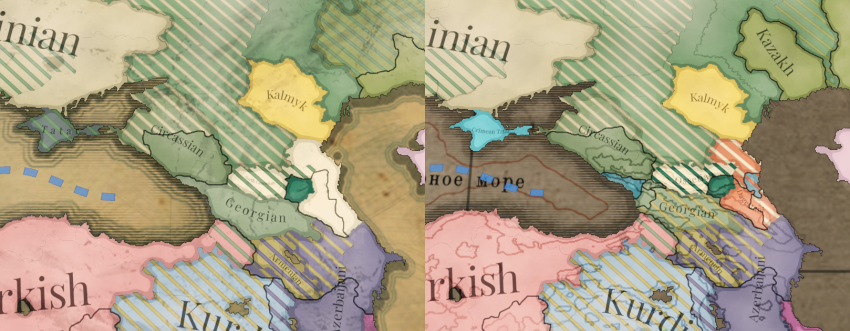
The cultural setup in southern Russia and the Caucasus in The Great Wave (left) and in upcoming State & Revolution (right)
You can't make a big picture without small details, and we have plenty of details to work out! One of the fascinating aspects of the Russian Empire during this period is the plethora of peoples who pervaded every province in the place. Working on the pack gave us an opportunity to implement some revisions and refinements in places like the Caucasus, where we were able to break apart the old 'North Caucasian' culture into more specific groups like the Ossetians and Dagestanis, and differentiate the Crimean Tatars from the more eastern Tatars of the Volga-Ural region.
We've also reworked the setup in the Russian Far East, consolidating the state layout while also improving the cultural diversity of the region.
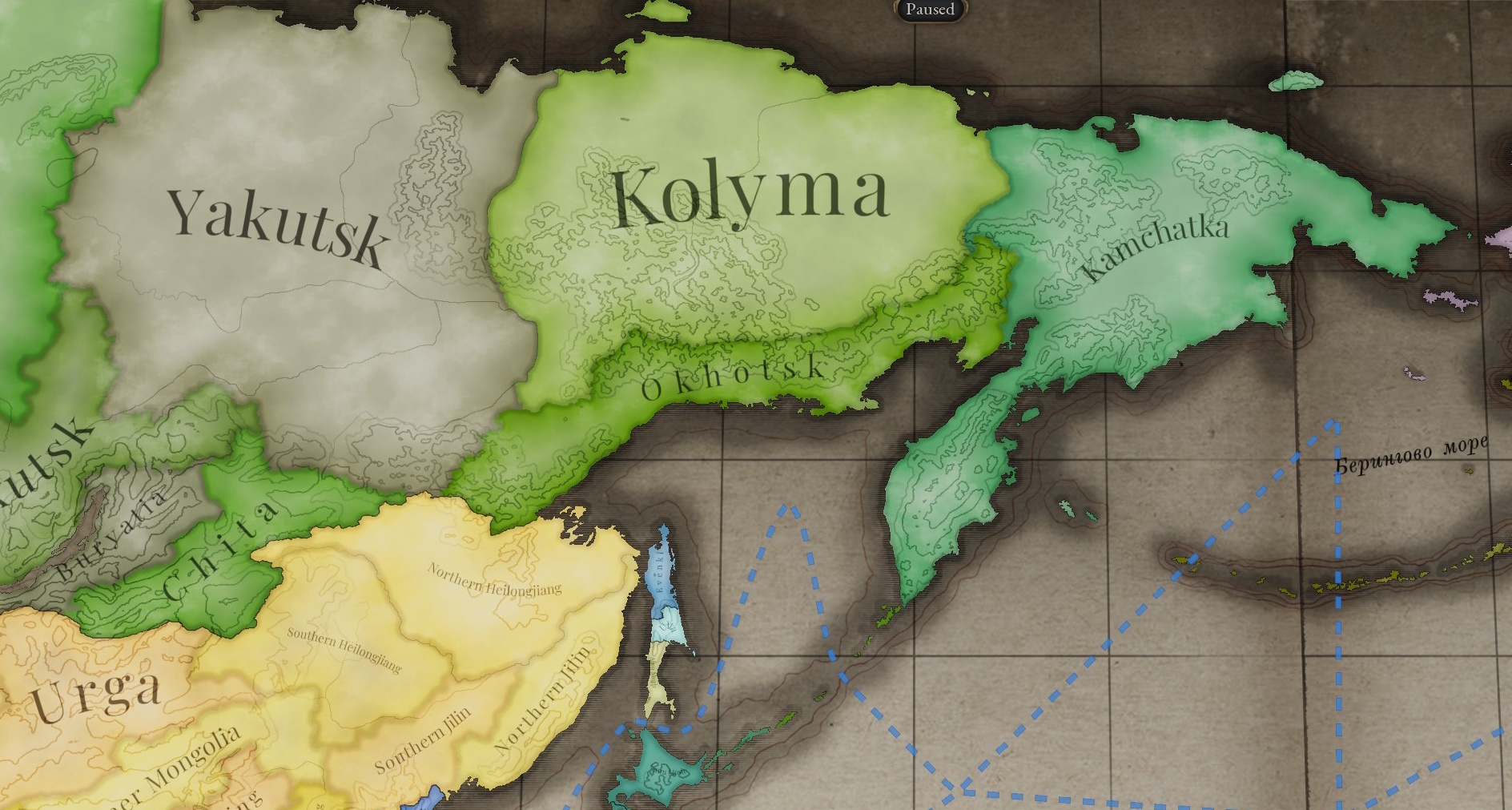
The Russian Far East! It has larger states now.
In this more consolidated set of states, the former 'Siberian' culture, representing native peoples of Siberia and the Russian Pacific, have been split up into more specific groups, such as the Chukchi and Evenki peoples. As Russia solidified its empire, these peoples, as much as the peoples of Eastern Europe and the Caucasus, had to face the challenges of national identity and survival as settlers and cultural policies left their mark on Russia east of the Urals.
But these aren't the only changes we've made to the map!
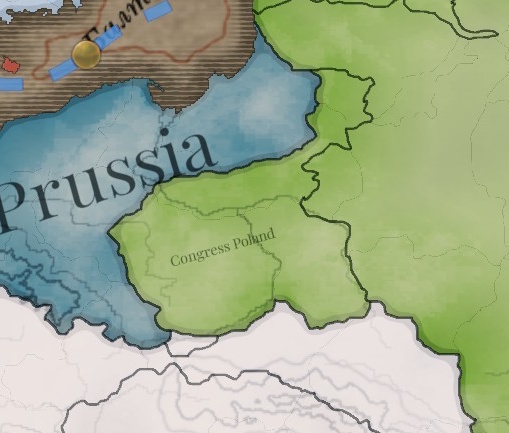
Congress Poland
We haven't forgotten Poland! Poland was in a tricky spot in 1836. Historically, Poland had been whittled down over the 18th century, from its heights as part of the Polish-Lithuanian Commonwealth to the three partitions of the late 1700s, culminating in its joint annexation in 1795 by Russia, Prussia, and Austria. A Polish uprising in 1806 led to the creation of the Napoleonic Duchy of Warsaw in 1807, but this new Polish state came to an end when Napoleon was finally defeated. In its place, a new "Kingdom of Poland" was established in 1815, ruled by the tsar of Russia and therefore in personal union with the Russian Empire. Since this Polish state was created by the Congress of Vienna, it's historically been referred to as "Congress Poland."
Since Congress Poland was theoretically its own state, it had its own constitution, its own laws, and its own autonomous status, but Tsars Alexander I and Nicholas I were staunch autocrats and reactionaries, and strove to reduce Poland's autonomy and less-autocratic laws whenever they could. This already led to one uprising in 1830, which led to a decline in Polish autonomy, and another uprising would occur in 1863 known as the January Uprising, resulting in another loss. The defeat of the January Uprising led to such a further decline in Polish autonomy that while on paper Poland continued to exist as a separate state, in practice Polish autonomy was such a non-entity that mapmakers regularly depicted Poland as simply part of the Russian Empire by the late Victorian Era.
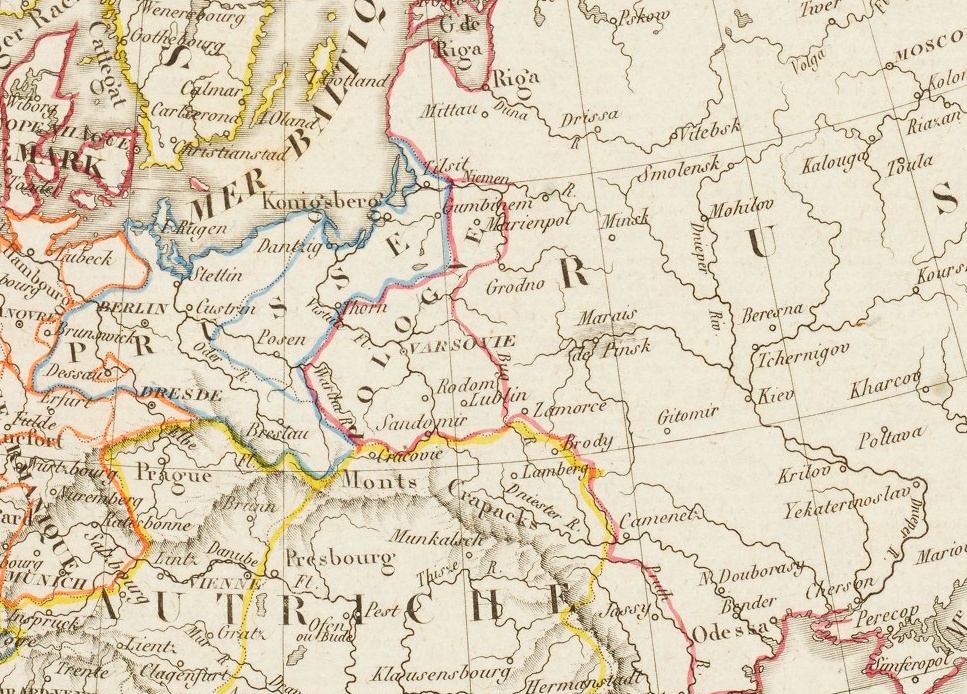
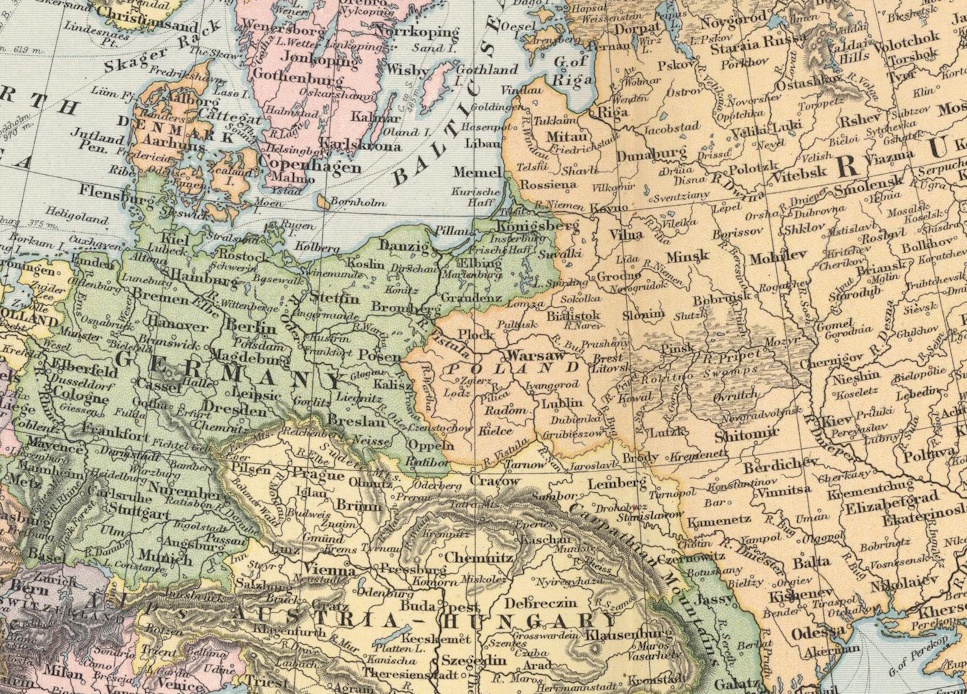
Poland in 1829 and 1892, according to Europe en 1829 by Conrad Malte-Brun, and a portion of Europe in 1892 as depicted in "Library Atlas of Modern Geography", published by D. Appleton & Co.
This was Poland's historical fate in the Victorian era; already a reduced puppet, over the course of the 19th century it was slowly silenced, its liberties stripped away, its movements to regain autonomy defeated again and again. Only with the Russian Revolution and Civil War did Poland re-emerge as an independent state. But! Poland does not have to follow this path if things play out differently- but to go into detail about that is a story for another dev diary. For now, let's go over to Lino. Hi Lino!
Pushkin sends his regards
Greetings and a Happy Thursday, Lino here with an interjection about another feature we’re delivering with the free 1.15 Update alongside State & Revolution.
For quite a while we had wanted to do something with this feature, and honestly there’s not a better time to do it than alongside a pack about Russia.
I’m talking about winter.
With 1.15, we’re introducing a Cold system that will bring some peril to adventures in the snow.
So how does this work? Based on the time of year, the Cold impact increases or decreases for states and more importantly sea nodes across the globe. This is different for every region, depending on where on earth they are of course. Some states will have some amount of permanent Cold, and some states will never experience Cold. Naturally, we’ve also taken into account the northern and southern hemispheres difference.
When the Cold impact value is above a certain threshold, it can have negative effects on a couple of things.
Let’s start with the fundamental one, the impact on ships and their movement. If a sea node’s Cold value is high enough, it starts slowing down ship movement speed, up to the point where ships barely move at all when they’re enclosed by ice.
So be mindful at what time of the year you send your ships through the Baltic for example. A ship will immediately be slowed down when entering a node affected by severe enough Cold.
The slowed movement of ships has two major follow-up consequences. The first is the impact on Supply for military land units that are supplied through a sea node which is affected by ice.
In that case, the number of needed Supply ships increases by 50%. This value is, as always, a work in progress value and is subject to change, but it should give an idea of where we think this should go roughly.
With 1.15, the Cold value in states themselves does not have an effect on the Supply of units present there yet, but we have thoughts on how to expand this in the future. That would require a more comprehensive solution though, which is why this was not feasible for this update.
The last effect that the Cold has is the impact on trade. Trade Centers whose state is connected to a sea zone affected by severe Cold will have a significantly reduced Trade Capacity, which will hinder their ability to conduct trade of course.
So shifting some trade towards an area with less winter problems might be a good idea if you’d like to avoid this becoming a problem.
Now, you may have noticed I’ve not shown anything visual in here. The reason being that with State & Revolution, you’ll get beautiful visual effects, not only for winter, but in fact for all seasons.
The Art team will showcase these beautiful visuals alongside the rest of the Art content coming with the DLC in a later Dev Diary.
So to make it very clear: The Cold system is going to be free, all visual effects will be part of the DLC.
With that I’m handing it over to Tunay.
Cossacks
Hello! Tunay here to introduce you to life on the frontier via a new feature exclusive to countries with an East Slavic primary culture: Cossacks!
As a group, Cossacks were initially a mostly independent semi-nomadic peoples living on the Pontic steppe situated at the edge of imperial control between Muscovy, Poland-Lithuania, the various Tatar Khanates and the Ottoman Empire.
Their relationship with the Russian state first began via the employment of Cossacks as irregular units tasked with guarding the frontier against Tatar incursions in return for goods and privileges bestowed upon them by the state. Over time however as the reach of the central government extended further south and Russia's control over the northern Black Sea regions solidified, the Cossacks were subsumed into the apparatus as another cog in the machine.
By 1836 however, slowly stripped of their privileges and all autonomy, the Cossacks had essentially been reduced to a tool for Russian imperialism and this is how we chose to represent them in-game.
To that end, we have added a new map interaction that allows the establishment of “Cossack Hosts” in owned states. Should you choose to establish a Cossack Host in a state up to 20% of current (and future) available Arable Land in the state will be reserved by the new Cossack Host building much akin to Subsistence Farms which the Cossack Host mirrors in some aspects, including fairly marginal production of a wide variety of consumer goods and which exists in parallel.
In turn the Cossacks will provide you with a variety of “services” and while we are still balancing the exact numbers here the benefits notably include migration attraction, policing in the form of reduced state penalties from turmoil and colonial growth. Making them well suited for settling the untamed and wild frontier. Their presence however will also cause conflict with already existing local populations if they are not of a sufficient acceptance level, increasing radicalism from discrimination amongst minorities in the state. Lastly, only Pops of East Slavic heritage can work in a Cossack Host.
If you are playing as Russia you will start the game with a bunch of already pre-established Cossack Hosts.
The new Establish Cossack Host interaction handles establishment and removal of Cossacks
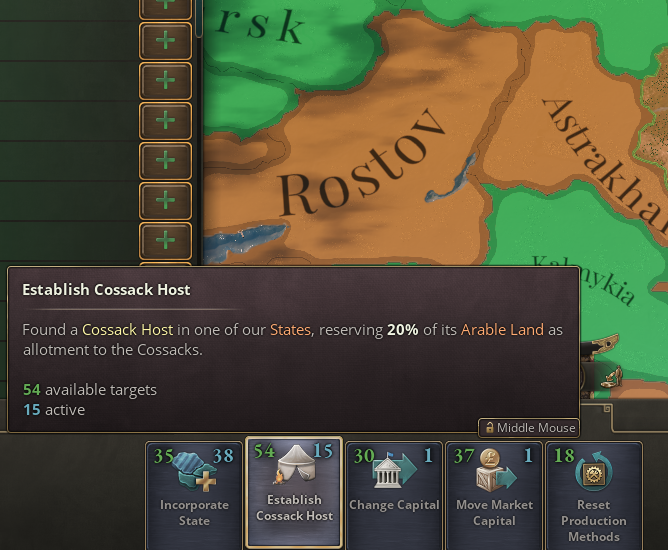
Cossacks also tend to be broadly supportive of the Monarchy, Peasant Proprietorship and most importantly the Church. This is largely symbolized by the new Cossack Movement which is a combination of the peasant and pro-monarchist movements and through which Cossacks will be able to make their voices heard within Russia.
Once a Cossack Host is established however they cannot be removed again until at least 10 years have passed and the act of disbanding a Cossack Host will radicalize the population and also increase the activism of the Cossack movement, this latter effect stacks so should you wish to abolish them altogether you may want to carefully weight whether you slowly disband the hosts one by one or purposefully agitate to hosts into an uprising against you.
Lastly, should a state with an active Cossack Host switch hands the building is not removed but it will no longer grant its benefits. The new state owner will have to actively disband them and deal with the fallout of that action. The Cossack movement also tends to be a thorn in the side of any foreign occupier and may be prone to rebellion, allowing the establishment of independent Cossack-led states.
The new mystery good
Is it Copper? Is it Cinnamon? Or is it processed Swedish fish pasta tubes after all?
Hey, it’s Lino again. Despite us really enjoying the speculation (and frankly the memes too), it’s time to finally lift the curtain on the previously teased new good.
(drumroll please)
It’s Copper!
Copper is a long-awaited (by some of you at least, you know who you are!) good that makes its entry into Victoria 3.
Being an important part of electrical and military production chains, its purpose is impactful and distinct enough that we felt it was time to introduce it.
We had toyed with the idea of introducing it with The Great Wave, as copper sheathing on ships was quite important during the time and also highlighted a pretty severe resource shortage that some countries like France had.
In the end, we lacked the time to do the full pass that we needed to do on resources, PMs, buildings and the research for it, which is why we’re doing it now instead. Similarly to the Cold addition, this ties a knot to the Navy update this way.
So, let’s talk about the use cases of Copper.
First up, we have a new production building of course. No longer will Copper mining have to be simulated alongside Iron and Lead.
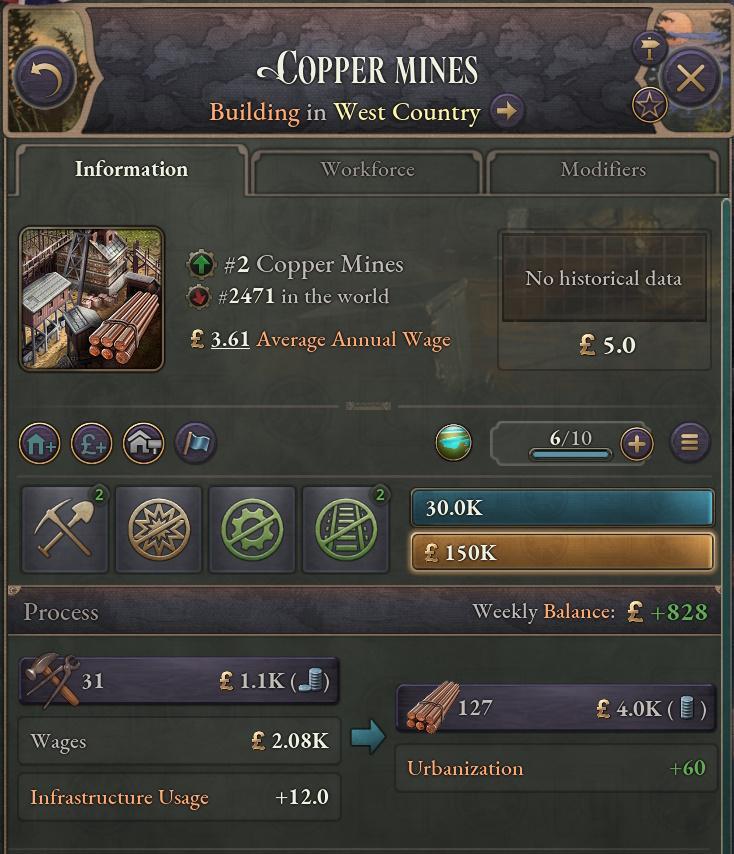
Look at all that yummy looking Cinnamon Copper being produced here
With the new building and good, we of course also had to distribute the good’s resource potential across the world.
Let’s take a look at the distribution shall we?
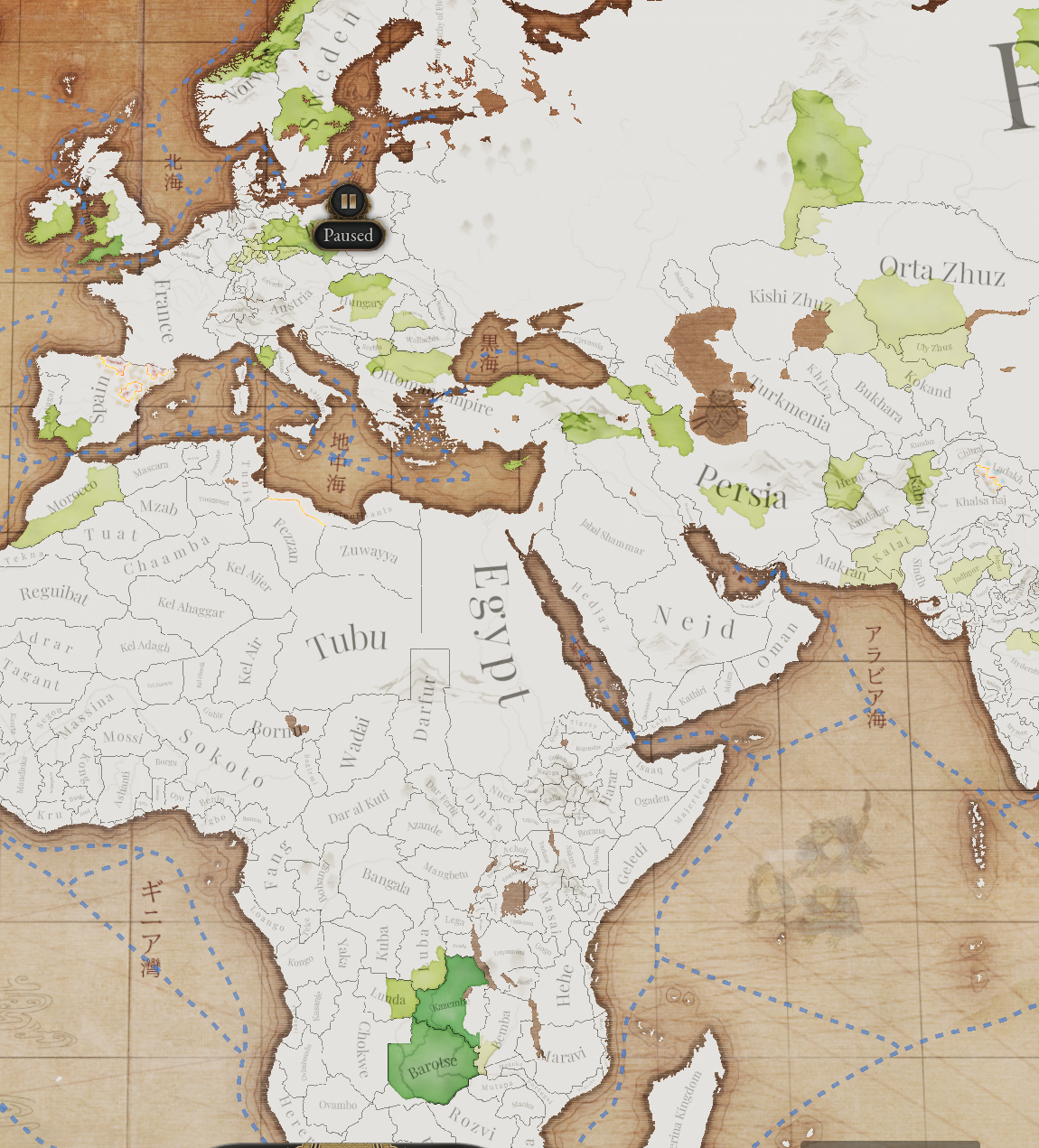
Cornish miners won’t stop digging until they hear drums in the deep
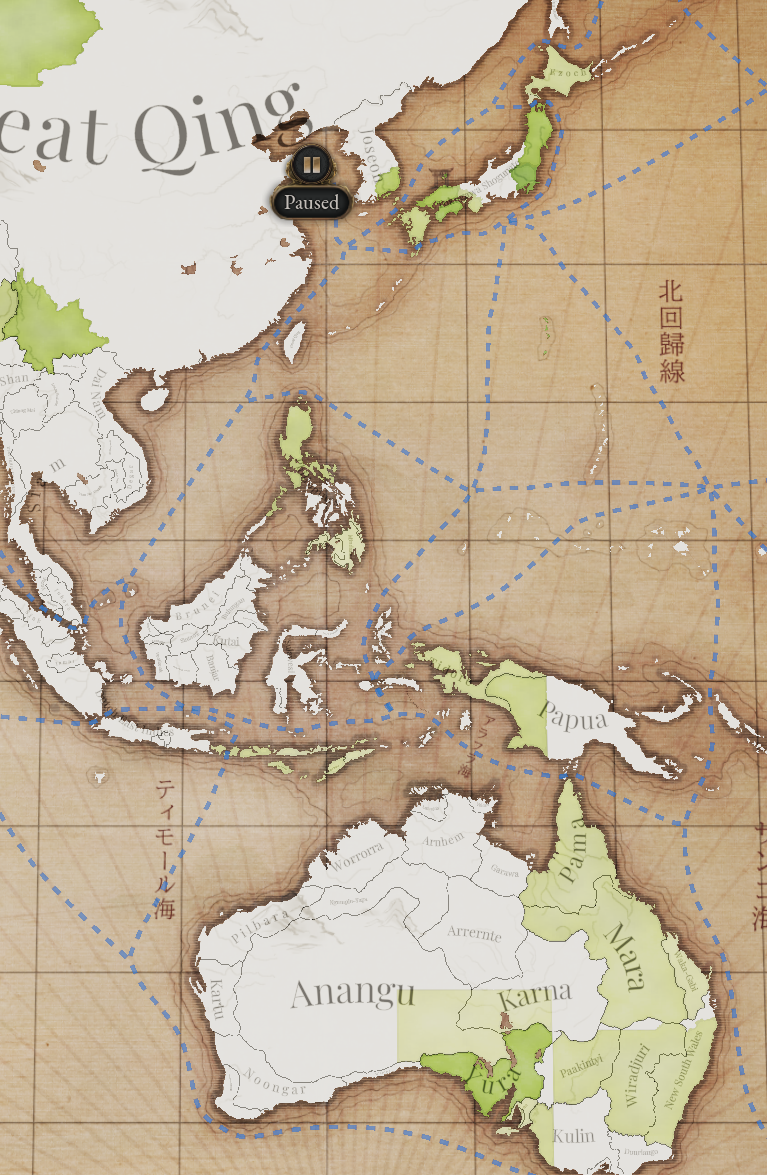
Australia and Japan are both rich in Copper
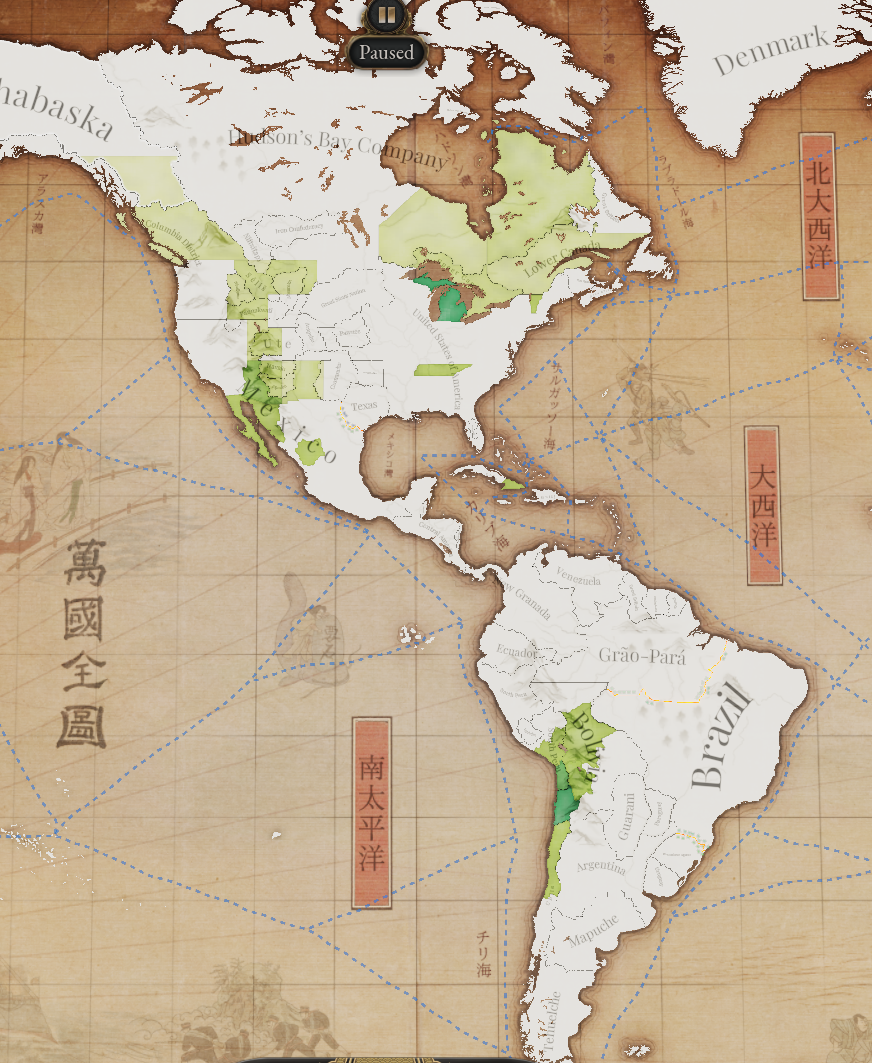
A look at Copper distribution in the Americas
And what do you end up doing with Copper?
As previously mentioned, it is used in a couple of processes. One I’ve mentioned is the sheathing of wooden ships, meaning that those now consume some amount of Copper. If you own The Great Wave and the Ship Designer, you’ll see that both the medium, as well as the high level of Armor have the requirement, but you can get around it by setting it to low.
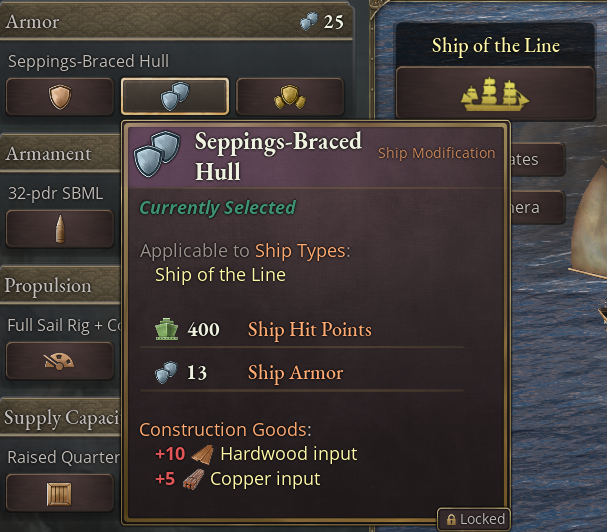
Yes, we are aware that the purpose was not to provide armor. Among the possible options, it was still the best fit.
Another one I’ve mentioned is anything electrical. Not only if the resulting products are, like telephones, but also if you use a Production Method (PM) that uses it, e.g. Rotary Valve Engines, or Electric Sewing Machines.

You will find a whole range of PMs now consuming a bit of Copper
Furthermore, Food Industries make use of Copper, in particular Pot Stills and Patent Stills will drive up Copper consumption by a fair amount.
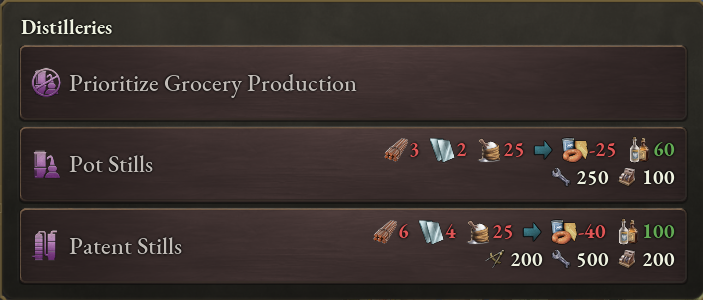
Shiny copper tanks are the heart of any good brewery
Last but not least, the cannon production at the start of the game was still split between using Copper and Iron. We have added a set of PMs that allows you to switch between the two goods for the first models of weaponry, before requiring only Steel in the more modern ones.
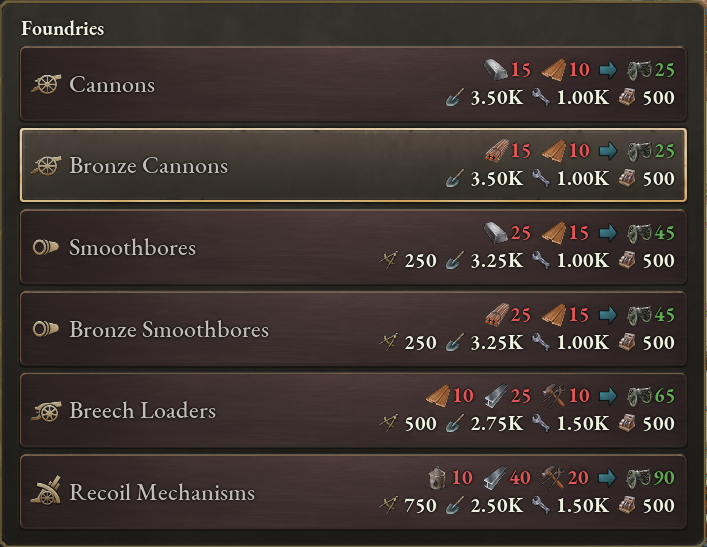
Historically, both materials had their pros and cons. But both produced devastation and destruction.
We are curious to see how things play out with the introduction of Copper, and if there’s a measurable increase in saliva production when looking at its icon in the game now.
That's all for this week, folks! Next week we're going to go into more detail about what's happening in Russia in this upcoming DLC, with imperial Tsars and red stars struggling to define what the future of Russia shall be.
Posted by the game’s developer or publisher to its Steam community hub and published by Valve through Steam’s public news API. Sifter reproduces it unedited and writes none of it.